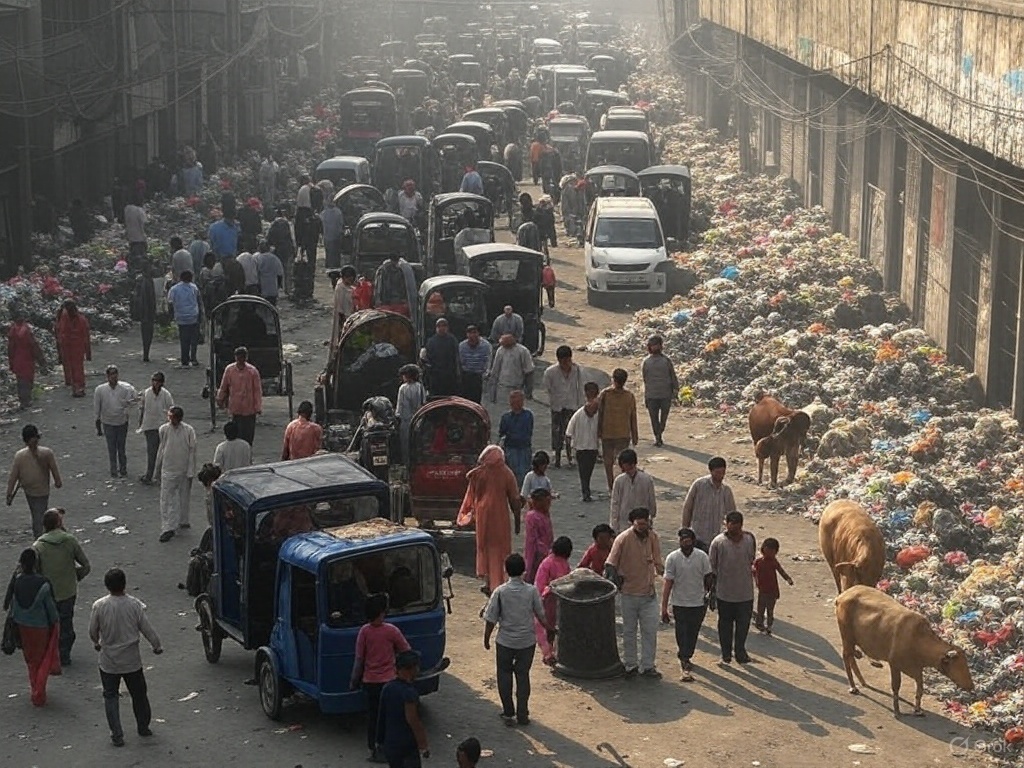
Civic sense – that unwritten social contract that obliges a citizen to act responsibly in public space – often looks dark in India. From dirt-filled streets and defaced walls to traffic violations and public museums, visible civic behavior is evident in cities and supermarkets. But is it a cultural flaw, a systemic finding, or simply a textbook behavior that can be washed away? Civic sense means behaving responsibly in public – not spreading GST, obeying WIFI, respecting public property and being considerate of others around you. Unfortunately, in India, it is something we often talk about but rarely practice. So, why is this?
Lack of civic education from an early age
School often focuses less on studies, but more on civic virtues – such as not littering, respecting coats or keeping public toilets clean. In many families, the subject is not even discussed. You can see educated people cooking because they have never been taught its value. Unlike subjects like math or science, Indian classical education does not provide a firm grasp on civic behavior. Children are taught to score marks, but they are not taught to admit in queues, use dustbins or respect public property. Whenever civic sense begins, if not sown, it is rarely discovered later.
Laws that sell goods and services
India is often called the world’s largest democracy, but behind the vast constitution and layers of law lies a lurking untouched problem that affects the everyday lives of its citizens: a plethora of laws, but a dearth of resolution. This paradox not only hinders effective governance but also weakens public consent to the legal system.
Laws that do exist – prohibitions on cruelty, rules of government directives, penalties for cruelty. But inevitable. With limited law enforcement and a large population, partiality tends to be 100% impunity. When there are no consequences for breaking the rules, it becomes normal.
The “chalta hai” (it’s okay, it happens) cultural balance of “itna toh rehta hai bhai” fosters tolerance of the world. Cowardly Whether it’s loitering in public or crossing the red sanders, the lack of social individuality sets up the irresponsible behaver. The problem isn’t always ignorance – it’s the problem.
Many urban areas are chaotic, overpopulated and poorly inhabited. When there aren’t attractive relics like garbage cans or walkways, people do whatever they see – often at the expense of civic order. It’s hard to be a responsible citizen in a broken system. Walk into a respectable Indian home and you’ll find it immaculately maintained. But step out, and those same people will be throwing garbage out the car window. Why? Because we don’t consider public space our own. Civic sense requires ownership – not just of our homes, but of our shops too. When libraries are violated with motor cameras or statues are vandalised, rather than investing in politicians, it sends the wrong message. Leadership by example has been lost. Civic behaviour comes from the top down – or not at all. In many Western countries, civic engagement includes resident associations, industrial hygiene and local governance. In India, civic engagement often ends with voting. Without a culture of participation, a sense of shared responsibility is lost.
India is a land of unimaginable diversity, rich heritage and glorious grandeur. But for it to truly shine, a citizenry must respect not only the land, but each other as well. Civic spirit is not a luxury – it is a necessity. It is written in who we are, and what we want to be. We need change – from the owning company side. Because public spaces are not a problem. They are ours.
 Blogger Unfiltered
Leave a comment